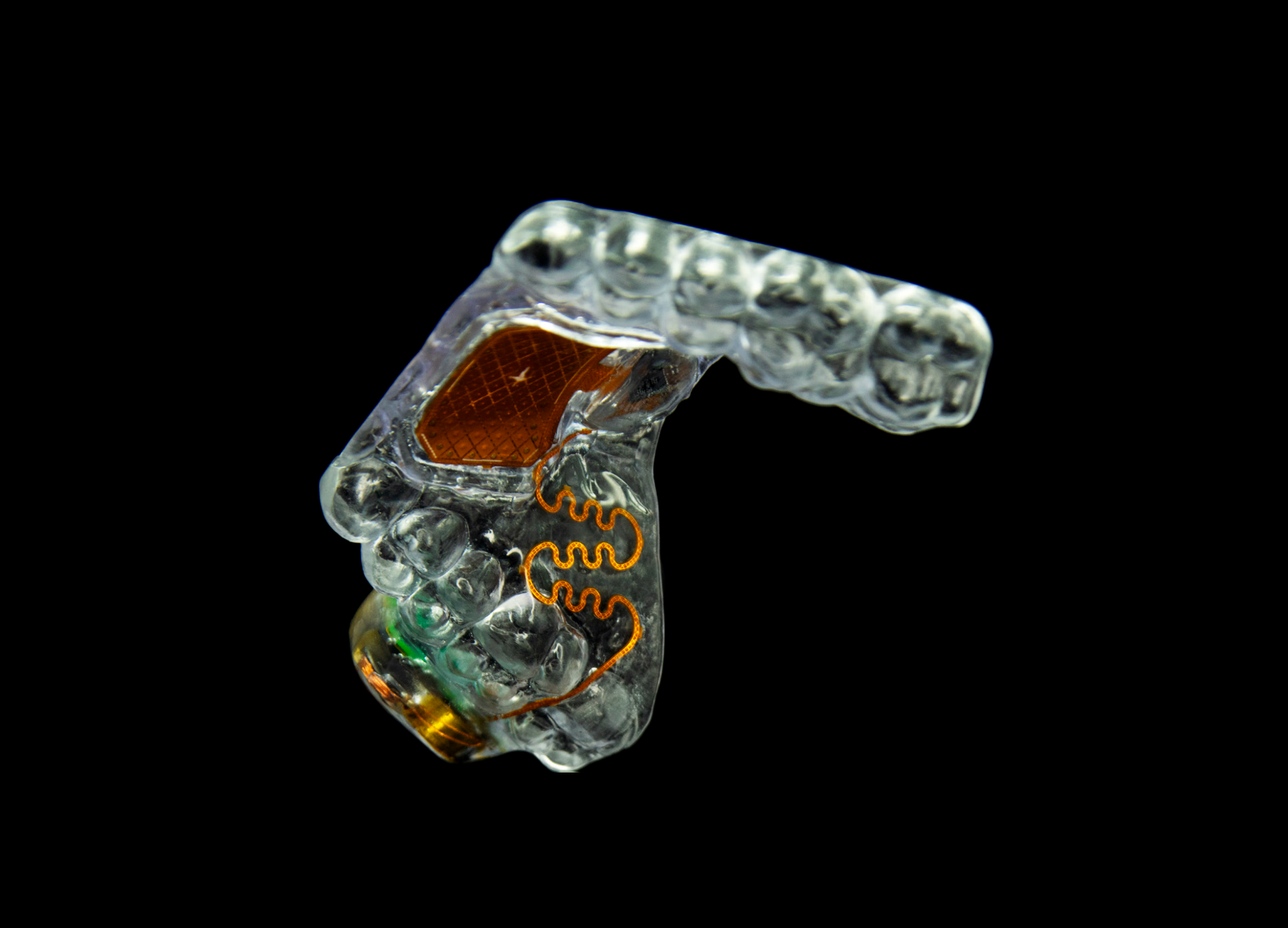

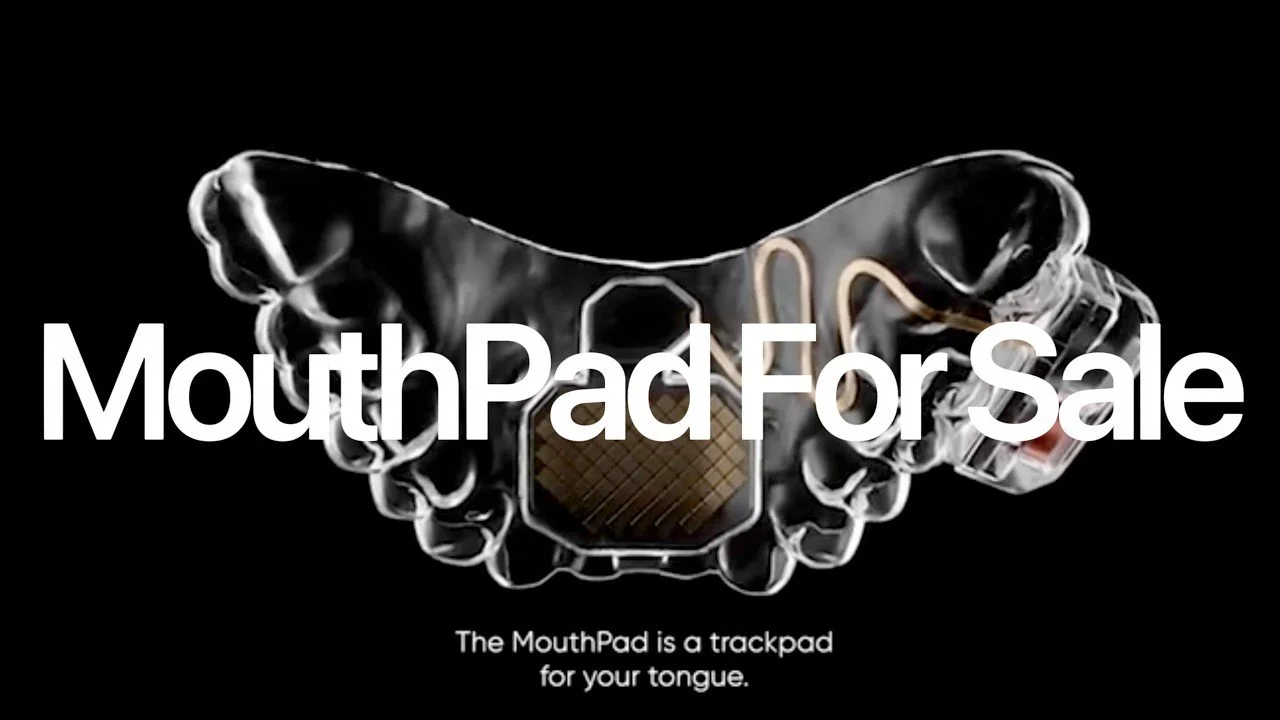


MouthPad is a custom-fit device worn inside the mouth that lets people control a computer with tongue and head movements. It connects over Bluetooth, allowing users to move a cursor, click, scroll, and type without using their hands.
I joined Augmental at pre-seed as its first designer and led design as MouthPad evolved from an early prototype into a public product. I worked closely with engineers, researchers, and users to define how an unfamiliar interface should behave, how people would learn it, and how we could make it useful in everyday life.
My role spanned product direction, interaction design, research, brand, launches, and fundraising. I stayed hands-on throughout, designing interfaces, prototyping interactions, coding training tools, building performance benchmarks, and directing campaigns.
The examples below show that work at different scales, from individual interactions to how we introduced MouthPad to the world.
Some users now rely on MouthPad for up to 16 hours a day, and more than 6,300 people have joined the waitlist. The work has received the Cannes Lions Innovation Grand Prix, a CES Innovation Award, a Core77 Design Award, and more than 340 million organic impressions without paid media.
MouthPad fits entirely inside the mouth, making the interface nearly invisible during everyday use. Learn more or get a MouthPad at Augmental.
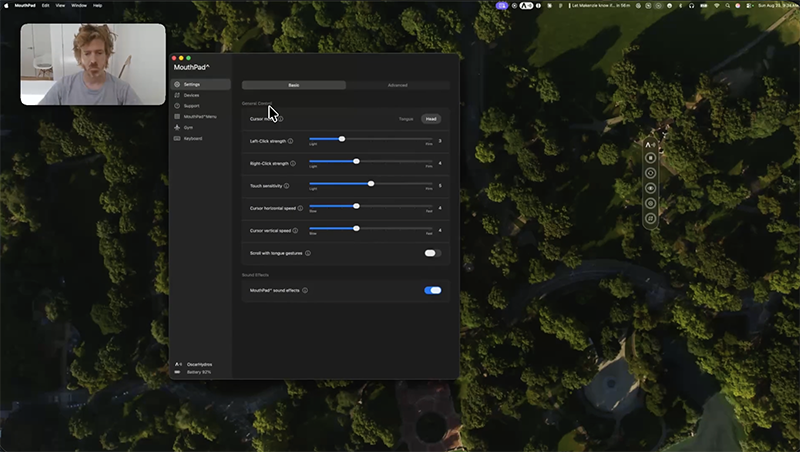
Many users keep a virtual keyboard open throughout the day, so I wanted the companion app to take up as little screen space as possible. I moved frequent actions into a lightweight menu-bar interface, making it quick to pause, recalibrate, or check tongue input without opening the full app.
I also restructured settings so common controls stay simple while advanced options appear only when needed. The principle was the same in both cases: keep everyday use lightweight and reveal complexity only when it becomes useful.
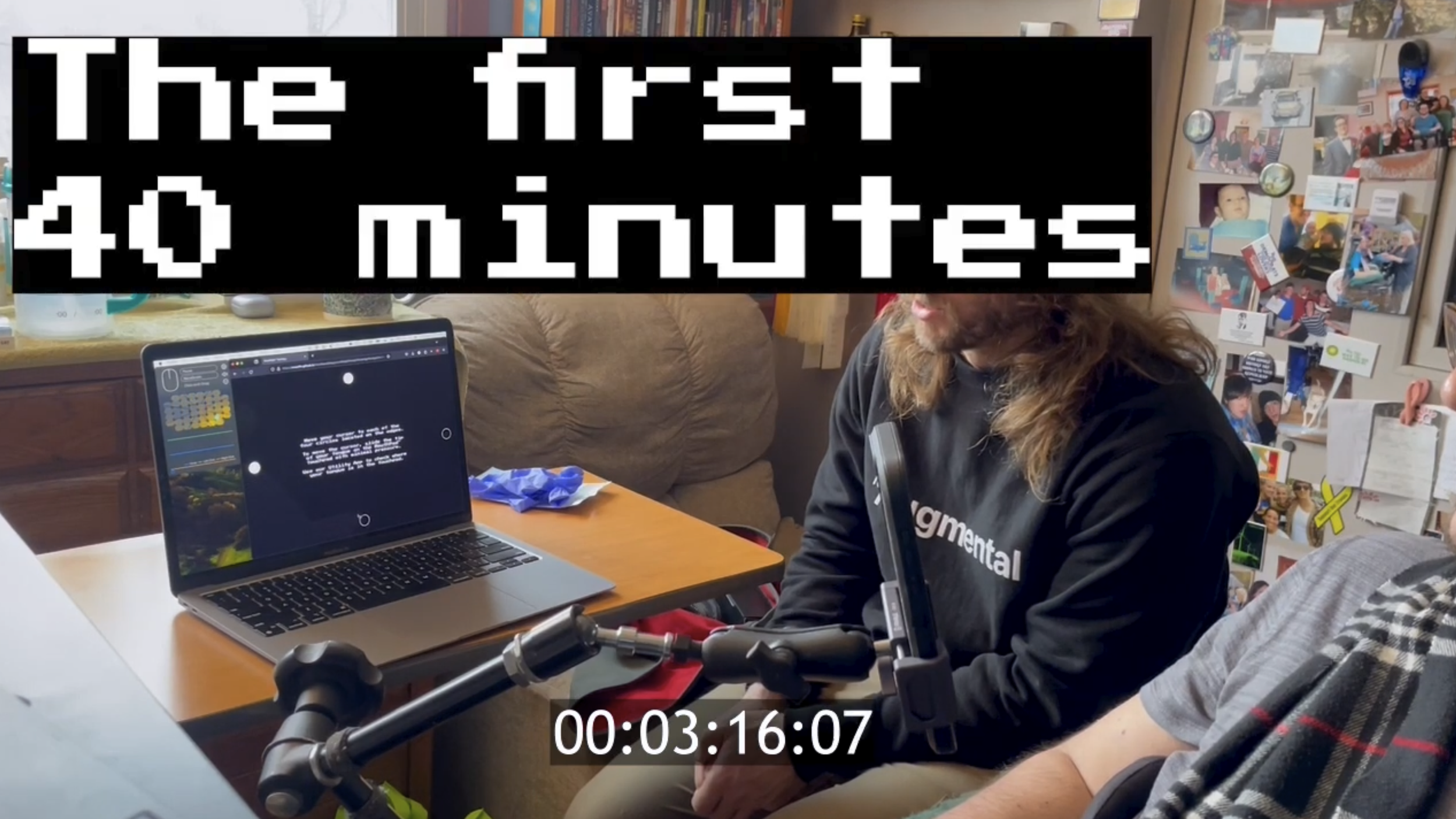
Learning to use the tongue for cursor control presented a different problem. Early onboarding could take roughly two days, and user sessions showed that people first needed to connect what they felt inside their mouth with what the sensor was detecting. Long sessions also became tiring.
I designed and coded a training system that broke learning into short exercises, each focused on a single skill. I changed the modules after almost every session, built roughly three times more exercises than we ultimately kept, and removed anything that wasn't improving learning.
Onboarding came down to about an hour, and sometimes as little as 20 minutes. What began as a hands-on training tool became the foundation for MouthPad's self-onboarding system.
Once people could learn the interface more quickly, we needed to understand whether changes to firmware, settings, or training were actually making control better.
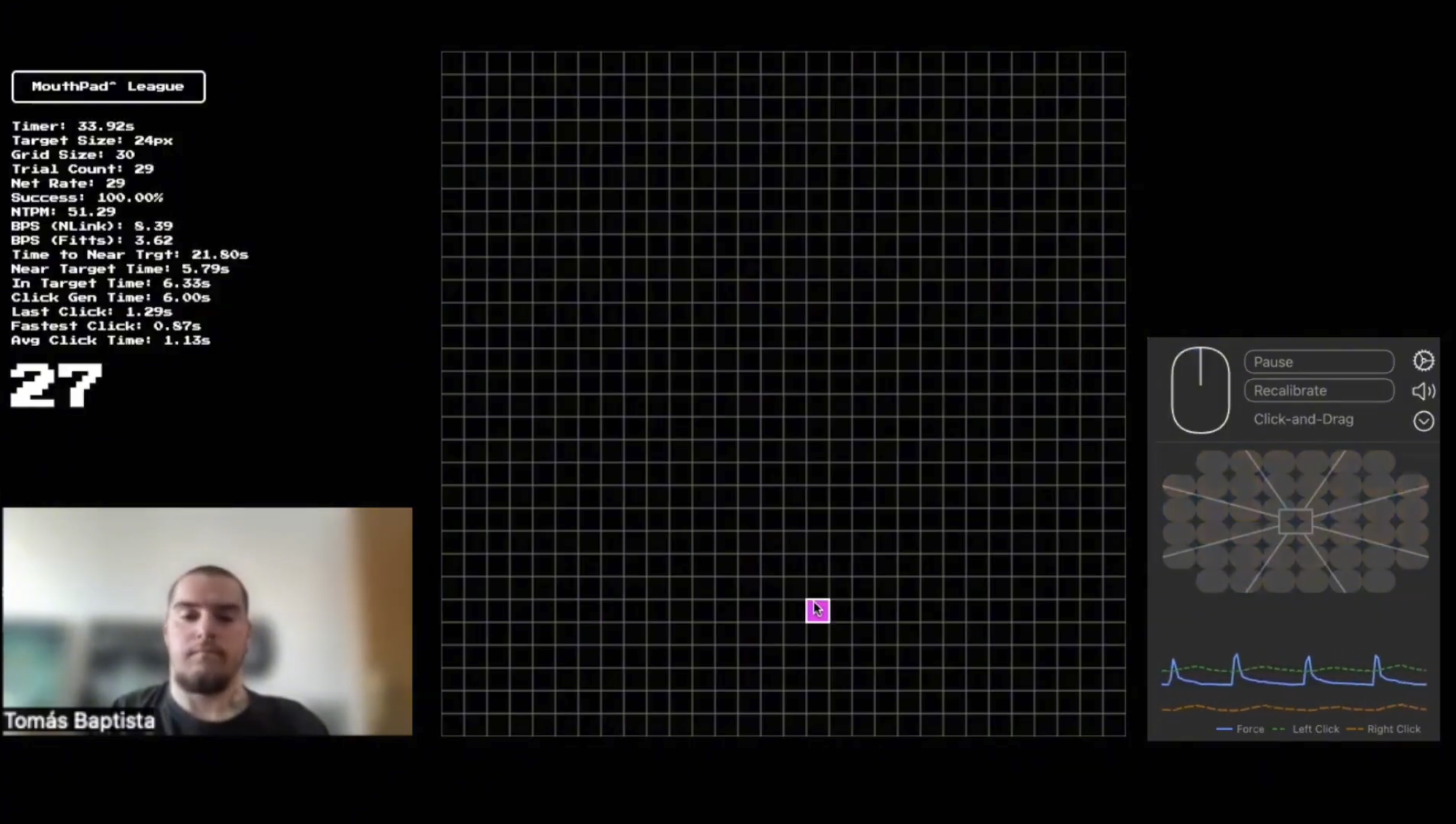
I designed and built a benchmarking platform based on Neuralink's Webgrid. A one-minute test measures selection rate, Fitts' throughput, and the time spent moving, settling on a target, and clicking.
We collected more than 400 runs, creating a shared dataset the team could use to compare changes and identify bottlenecks. One user reached 10.63 bits per second, in the range of published results from leading brain-computer interfaces at the time.
I also explored how MouthPad could go beyond pointing and clicking.
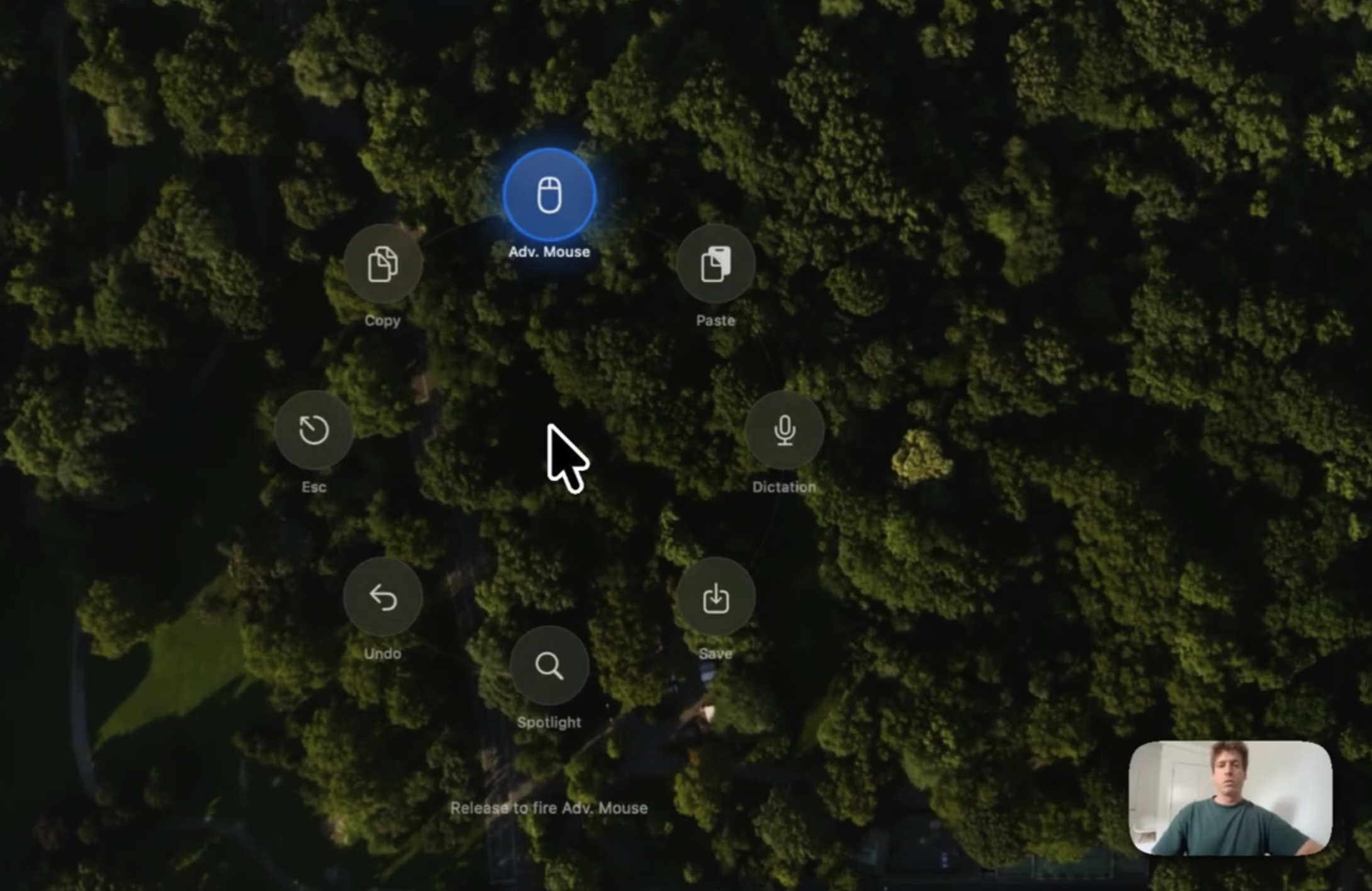
I designed and prototyped a radial shortcut system in which a sip opens the menu, directional tongue gestures select a programmable command, and releasing executes it.
Triggering on release lets users change direction before committing, keeping the interaction fast while making mistakes easy to correct. Paired with dictation, the system supports app switching, tool selection, text editing, and other frequent actions.
The same design work extended to how we introduced MouthPad to the world.
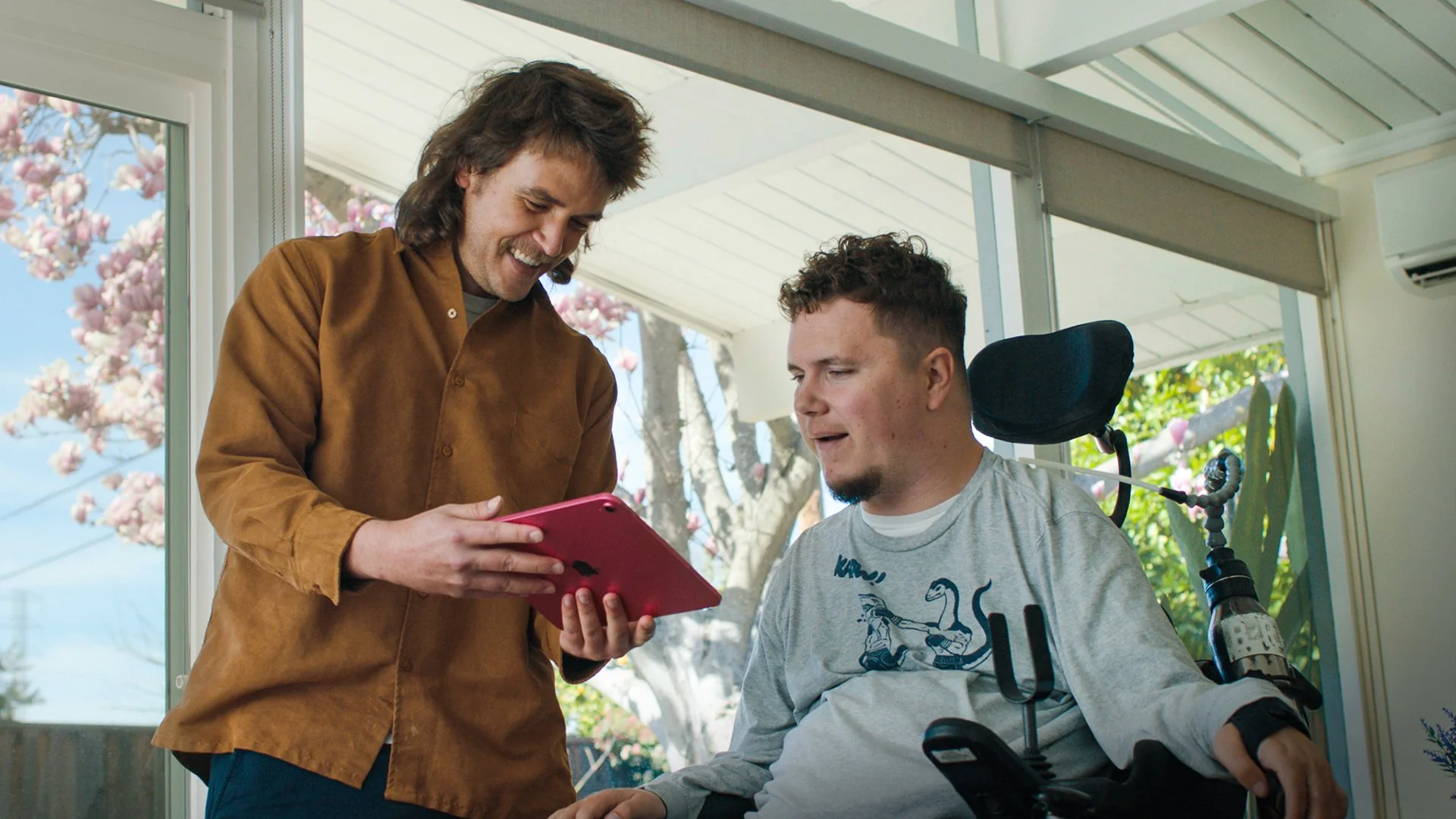
I directed its first global launch, setting the narrative and leading creative direction across film, brand, web, social, and PR. I shifted the story from the founders to the people using MouthPad, with the goal of portraying assistive technology as capable, desirable, and culturally relevant (pushing the boundaries of accessibility and sexuality along the way).
The first campaign was produced in collaboration with Wunderman Thompson. I led the work from Augmental and made the key creative and editorial decisions through launch. It generated 172.6 million impressions across 949 outlets, reached #1 on Hacker News, drove more than 1,000 waitlist signups, supported fundraising, and won the 2023 Cannes Lions Grand Prix for Innovation.
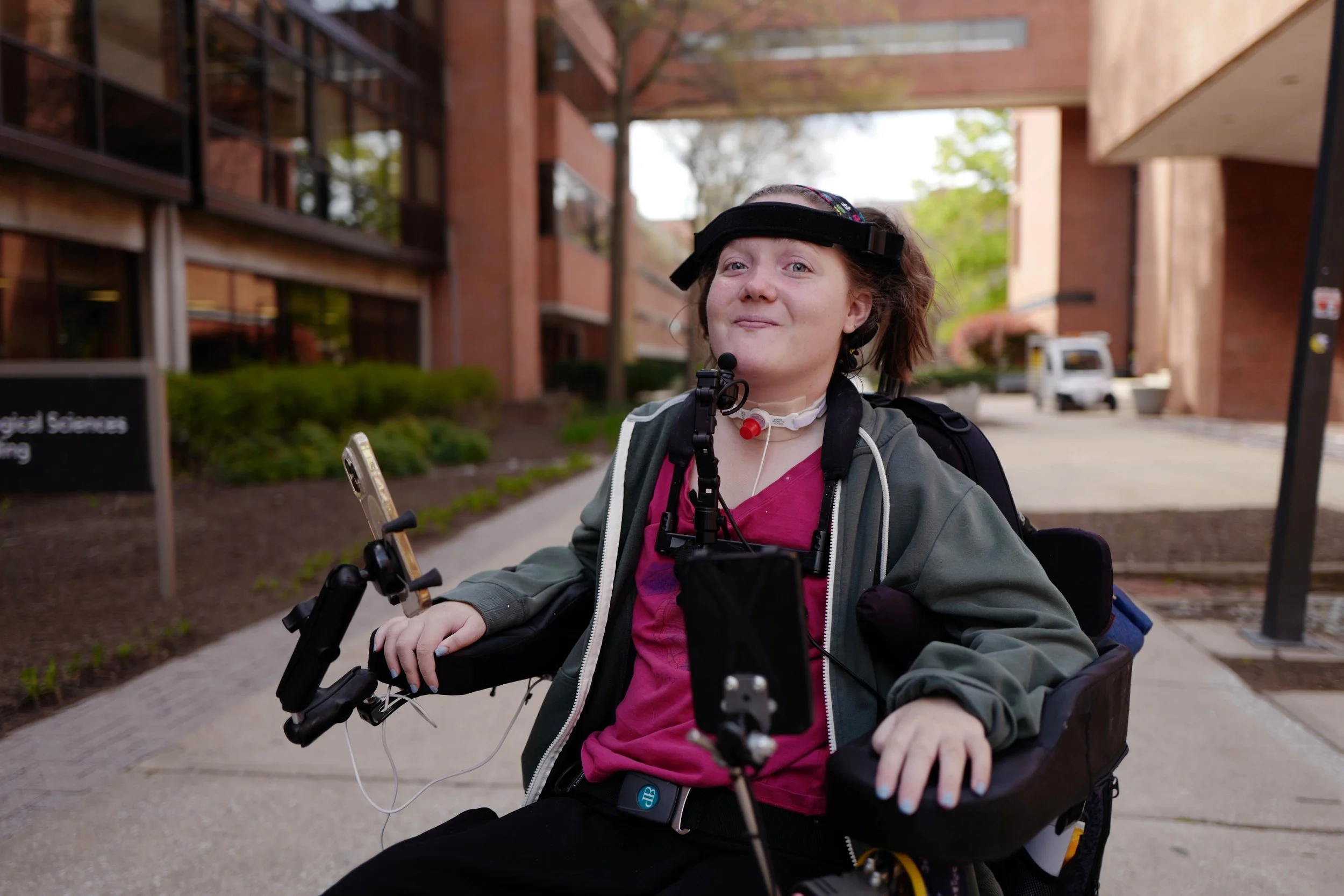
For a later campaign, I centered the story on Keely, a math and computer engineering student who uses MouthPad to code, write equations, and take notes.
I shaped the story, treatment, script, edit, press, and social rollout with the production team, focusing on what MouthPad enabled rather than explaining the technology in isolation.
The campaign generated 88,400 click-throughs and 118 articles, became the #1 film in the BBC's 32-part Human Component series, and helped grow the waitlist beyond 3,000.
or the public launch, I built the fourth campaign around what people were actually doing with MouthPad: everyday computer use, gaming, creative work, and communication. Showing their work gave people a direct way to understand MouthPad’s capabilities.
I directed and produced the campaign media, including photography, filming, and editing. I also led a rebrand, designed a new website, wrote its copy, and introduced a new product as part of the launch. This brought the identity, product story, and campaign together across the places people would encounter MouthPad.
The launch increased daily site traffic by roughly 30 times, earned coverage from IEEE Spectrum, Gizmodo, designboom, FOX News, and New Atlas, and helped grow the waitlist beyond 6,000. August 2026 became our highest-revenue month to date. The online community has been incredibly supportive of our work, check out the comments section on Youtube.
MouthPad also supports head tracking. This demo shows how head movement can control the cursor alongside tongue input.
For Config 2025, I developed the narrative, presentation, and visual system for Corten's part of our talk, translating the product and interaction work into a story for a design audience.
To learn more about the MouthPad, check out our user testimonials and visit the Augmental website.